

A Conversation with Incoming SPS Superintendent Ben Shuldiner
The new leader is guided by Jewish values of education, responsibility, and action.
“I truly believe we can make Seattle the greatest urban school district in America.”
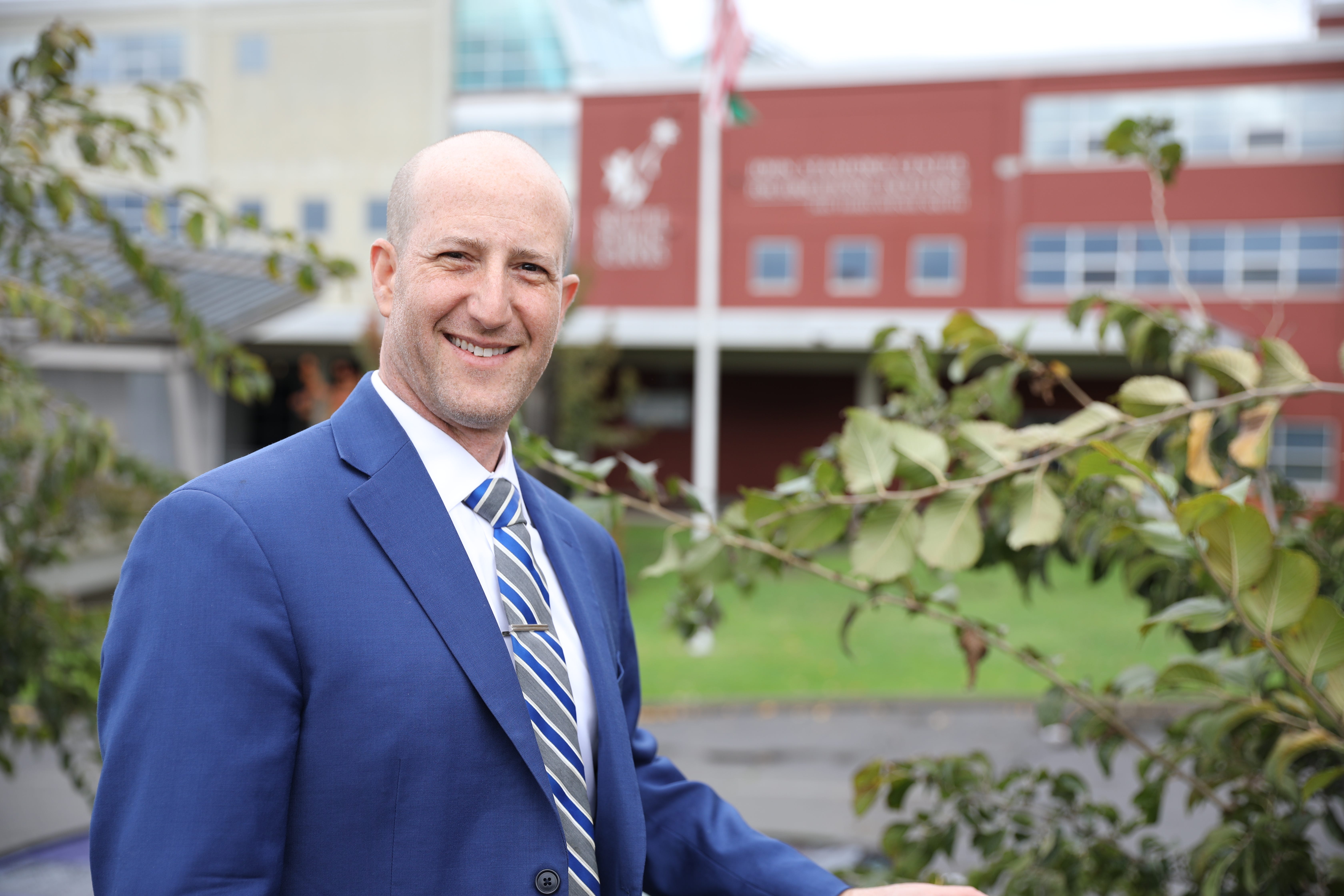
When I sent a cold email to newly hired Seattle Public Schools superintendent Ben Shuldiner about an interview about his educational philosophy and his Jewish background, I did not expect a response, let alone two conversations in two weeks in which the 48-year-old New York native spoke candidly about his life and values.
That openness is part of Shuldiner’s plan. Seattle Public Schools has been a black box in many ways, taped up by bureaucracy and largely inaccessible to Jewish leaders and families who want accountability for reports of discomfort and outright discrimination.
That openness is so much a part of Shuldiner’s plan that he proposed an interview time with me for 8 pm Thursday night — that’s 11 pm in Lansing, Michigan, where he still lives.
Shuldiner’s contract was finalized on Wednesday. He will take the reins on February 1, 2026 from interim superintendent Fred Podesta, who took over for Brent Jones. Jones announced in March that he would leave the district in September, but went on medical leave in May and did not return. The largest district in the state, SPS serves approximately 50,000 students and has been in turmoil over debt, safety, and academic outcomes.
I greatly appreciate Shuldiner’s willingness to talk and wish him the best of luck in his new, challenging role.
—Emily
The Cholent: Let’s start with why you’ve decided to leave your current leadership role in Lansing, Michigan, and come to Seattle.
Ben Shuldiner: I’m honored to be named the next superintendent of Seattle Public Schools. I love Seattle. Being able to come here and support this district is tremendous.
When the headhunters first reached out, I told them I wasn’t looking anymore. I’d been a finalist for two major superintendent positions and decided I wanted to focus on Lansing. I’d said no to several other cities. But then they said “Seattle,” and I thought, “Seattle’s open? That’s different.”
I love the culture and vibrancy of Seattle. The district is very good, but it can be much better. I’ve said this many times: I truly believe we can make Seattle the greatest urban school district in America. The talent is here: teachers, administrators, support staff, families, and of course, the students. Politically and culturally, I feel at home in Seattle. The weather is my favorite kind — not too hot, not too cold. When they called, I spoke with my wife and said, “What do you think?” and she said, “You know the answer.” So, yes.
I’m also grateful for how the board has embraced me. We’ve already had great conversations, and I’ve felt real support from the city.
I know you’re not coming here just for the weather. Clearly there’s a challenge you feel ready to meet. What are your high-level goals starting out?
There are three major buckets. First is the budget. They’ve been very open that there’s a significant deficit, between $80 and $100 million depending on who you ask. When I arrived in Lansing, we were $20 million in the hole. Five years later, we have over $50 million in the bank. That happened because we led the community and the district to be better about budgeting. We can do that here with transparency, accountability, and a willingness to make decisions.
Second is academics. Seattle has some excellent schools and some that are not serving kids as well as they should. In Lansing, we increased graduation from 62 percent to 88 percent, raised attendance by 15 points, and increased AP exam passing rates by over 630 percentage points. That came from raising expectations, building systems, and supporting educators. The students and teachers in Seattle are incredibly talented. I know we can increase rigor and outcomes.
Third is trust and transparency. In Lansing, there had been a rift between community and district, and the district responded by putting up walls, being siloed, not being in the community. One of the first things I did was create family and student superintendent round tables and visit every school. Teachers told me they’d been teaching 30 years and never had a superintendent visit their classroom. That’s unacceptable. Trust requires presence, transparency, and genuine engagement. Seattle deserves that.
What can be done for the budget and for academics? People throw around ideas that never seem to work. What isn’t working? What will you do differently?
The first thing is to actually listen to people and have plans. I don’t mean to throw shade on anyone, but I’ve seen people present an idea with no plan behind it. That’s not okay. You can’t bring a half-baked idea to the board or the community. If we need to streamline offices or make departments more efficient, then you’ve got to talk to the departments first, to the people, and have a plan for maintaining services.
There’s also inefficiency between grant money and general fund money. Often they’re budgeted separately and don’t talk to each other, so you end up with repetitive programs. We need to go line by line through the budget. If that has to be done in front of cameras to build trust, so be it.
We also need community input. If we’ve got to save $20 million, how should we use it? And then we need the backbone to act. Not everyone will like it — it’s a big city — but paralysis will make things worse. Once the community co-constructs the solution with us, we have to implement it.
On academics: for instance, the district is going to approve a new ELA curriculum. Once it’s approved, our job is to teach it with fidelity and support teachers and kids. I’ve seen good ideas without follow-through, accountability, or fidelity.
Switching to your personal background: You identify as a secular humanist, and you’re from New York. How do your Jewish values inform your leadership?
My family has a long history of public service and caring for community. My mother was an English teacher, my father taught math before working in public housing, my grandmother ran a nursery school in the Bronx, and my grandfather ran an education rehabilitation center. Our family has always devoted our lives to public service, especially to kids.
The idea of repairing the world, but also, the place of education that sits within Judaism — even the idea of casting your sins into the water to ask for forgiveness [on Rosh Hashanah] — it’s about action, not just words. It’s about asking for forgiveness, but also promising to do better, and then taking the action to do better. A lot of times, the idea of being the chosen people has been misconstrued for relatively anti-Semitic reasons. But it was because Jews chose God, not the other way around. We have to be the actors to do right by the world and right by our community. Education, action, questioning — it’s all Judaism to me, as much as a bagel from the Upper West Side.
And those are some pretty good bagels.
Yes. An important part of Judaism. [Laughs.] A dear friend of mine who’s a rabbi once said, “In a different world, you would’ve been a rabbi.” I told her, “I’m a teacher. It’s a little different.”
Hey, it’s never too late for a second career.
I’d like to be superintendent of Seattle and then retire.
I have a feeling you won’t be able to relax into retirement.
Probably not.
I want to dig into the issue of anti-Semitism. In the last two years, across the country and especially in progressive cities like Seattle, anti-Semitism seems to sit in a blind spot. How do you approach that? What do you say to a family saying, “I’m thinking about pulling my kid out of public school because anti-Semitism isn’t being addressed”? Or how do you deal with, say, a swastika on a bathroom stall that doesn’t get dealt with by a school?
I would apologize. Any leader must take seriously when people feel threatened. If hate crimes occurred and weren’t addressed, that’s on the district.
I’ve already received emails highlighting all sorts of concerns. I’ve heard the same about sexism and racism. What you’re describing seems part of a larger issue: people being attacked or maligned not getting the district’s full protection.
What I’d say to Jewish readers, or anyone who wants to be an ally: if you see something bad, tell us. And we must act. If something is brought to me and we don’t deal with it, that’s on me. You should come after me — just give me a couple days to find a place to live first. But seriously, I’ve heard from people who say their concerns weren’t handled for years. We need to create systems and structures that take all of this seriously.
From my perspective as someone incoming, it’s about creating systems that take these issues seriously. If anti-Semitism has been shoved under the rug, that’s horrible and needs fixing. But I’m hearing similar concerns across multiple identities.
If needed, we might consider outside entities to hold the district accountable — ombuds roles, oversight boards — people who can protect complainants. I’d ask for time to try to fix it internally, but large organizations often need structures like this.
And let’s be clear: when Black kids are suspended at five times the rate of white kids, that’s a systemic issue too, just like anti-Semitism. SPS needs to address all of this in a pointed, specific way and not downplay it as “not that bad” or “you’re privileged.” Bigotry is unacceptable in any form.
Right. The problem, often, is that anti-Zionism is coded as free speech, and so Jewish kids feel unsafe but dismissed because it looks like a First Amendment issue. That’s been a challenge here.
I appreciate you telling me that. If a child feels endangered or unsafe, that’s their reality, and we must address it. Swastikas and Confederate flags are racist and bigoted, full stop. Our job is to protect children and create an environment where they feel safe and supported. I think as a district, we need to put our children first and recognize that there are things we have to do to protect them. It’s up to the district to explain it and to be thoughtful about it. But we have to make sure that our children feel safe and feel supported in all manners.
Any final message to Jewish readers in the Seattle area?
Thank you for believing in the district and sending your children to our schools. You have options. The district will only get better if the community helps. You’ll see as I start my job that there’s going be a kind of clarion call to bring the community back into the schools to start tutoring and mentoring and creating those relationships. And I think once you do that, much of the disconnect that might be felt will dissipate. Now, I don’t believe that it all goes away. I mean, people have hated the Jews forever, but we’re in this together.
By mentoring and tutoring our children, they’ll actually learn more, too. The research is really clear. There’s three things that move the needle: a high quality teacher in the classroom, mentoring, and tutoring. I’m going to ask the community to help me with the mentoring and the tutoring.
Feel free to invite me to things. I’m new, and I don’t know what I don’t know. If there are things you want me to see, please let me see those things. I can only be a better superintendent if I have those experiences. And I’m going try to bring my team too, because they need to see it as well.
Expect some Shabbat dinner invitations.
I love it. The only conflict might be Friday night football. I might just be late — Friday night lights first, then Shabbat dinner.

Announcements
Check out the Seattle Jewish community calendar.
Candlelighting in Seattle is at 4:08 p.m. The parasha is Toldot.
Order your Mah Jongg Card
Order your 2026 National Mah Jongg League Playing Card to benefit Hillel UW! Did you know Hillel UW has become a center for community Mah Jongg? Place your card order and a portion of the cost will be donated to Hillel UW by the Mah Jongg League:
https://www.hilleluw.org/programs/community-mah-jongg-hillel-uw/
Community Conversation
Washingtonians for a Brighter Future and community partners are excited to host a town hall conversation with a bipartisan group of Washington State legislators who traveled to Israel in September. Rabbi Brett Weisman of Temple De Hirsch Sinai will moderate the discussion on Sunday, December 7, at 3:00pm on Mercer Island. Details and registration: https://wa4future.org/2025-12-07/
Yiddish Songs of Change and Resilience
Saturday, Nov 22 at 7:30 PM
Herzl-Ner Tamid synagogue is hosting the Golden Thread Ensemble, featuring Grammy award winner Lorin Sklamberg (The Klezmatics), Latvian Yiddish singer Sasha Lurje, and Seattle-raised violinist Craig Judelman. Experience powerful new arrangements exploring Yiddish music’s role in justice, equality, and Tikkun Olam.
Register: https://h-nt.shulcloud.com/event/scholar-in-residence-weekend1.html
Glad to see this early contact with the new superintendent. Nice! One thing he will need to address is the Seattle schools' not fulfilling public record release requests currently more than a year old which are aiming to understand the curriculum around the middle east in Seattle schools. Transparency is key. I hope he remains responsive to the concerns of the Jewish community.