

Closure
What bringing the last hostage home means for the person who put the first posters up.
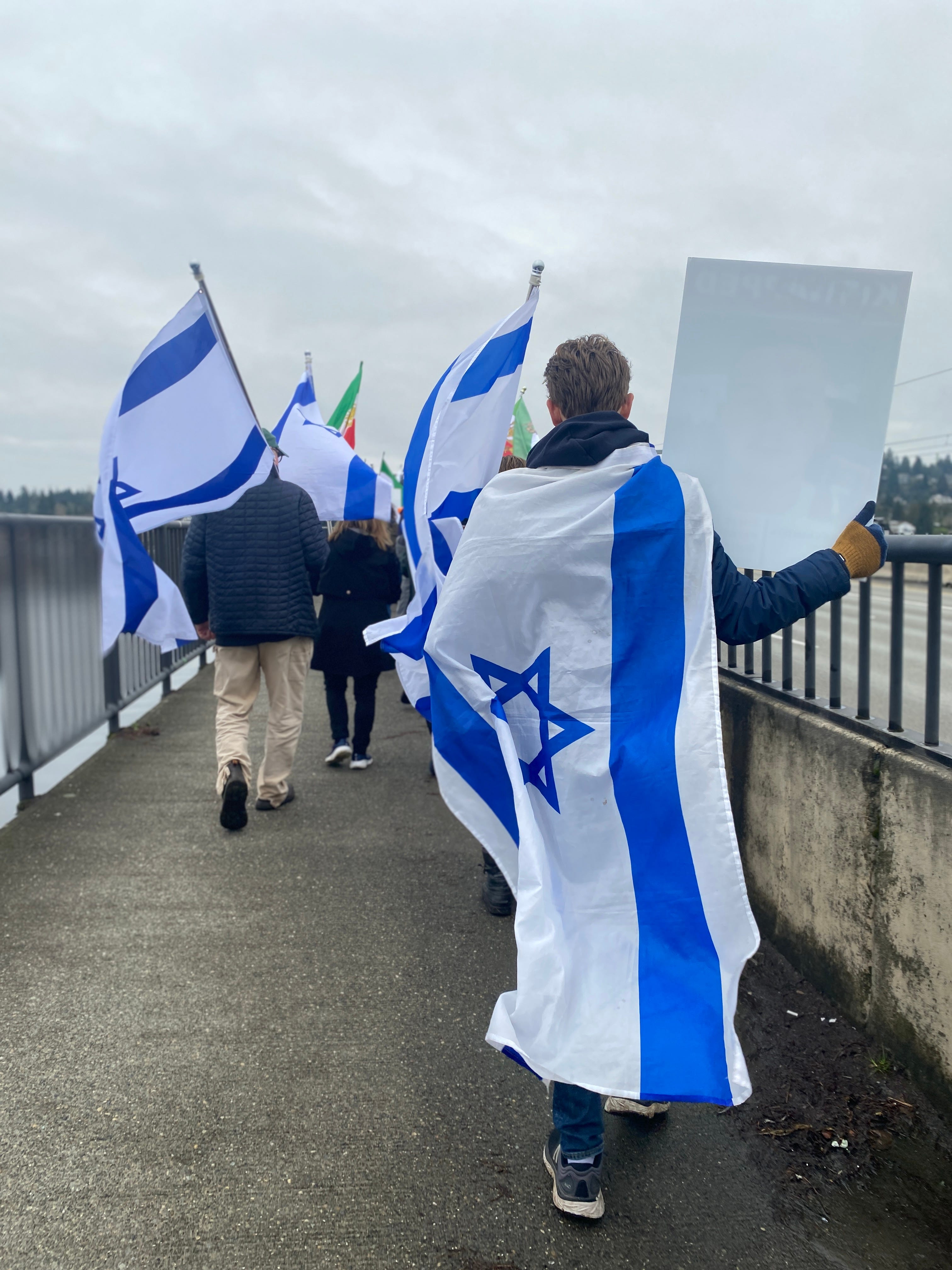
In September of 2024, just under a year after the October 7th attacks, I spoke to Sasha Matison. Sasha is the unlikely activist who played a lead role in ensuring the Seattle area would not and could not forget about the plight of the hostages. Originally from Riga, Latvia, Sasha transformed his horror at the tragedy in Israel into action. He was one of the first, and most consistent, people to hang posters of the hostages’ faces around the region, and he helped organize rallies almost every Sunday.
Now that the last hostage, Ran Gvili, whose body was recovered from Gaza last week, is home, I asked Sasha how he feels now that this chapter of life and activism has finally closed. Or, as Substack writer Tabby Refael put it, what am I supposed to do with this yellow hostage pin?
The Cholent: Sasha, we spoke back in 2024 about your activism around hostage awareness. You put up some of the first posters and kept going. Now, the hostages are finally home. How are you feeling?
Sasha Matison: It's very important to have closure. When we received the news that the body of Ran Gvili was found, it was January 26th, a little over a week ago. It was a great sense of relief, but, you know, at the same time, it was kind of hard to believe that it actually happened, the reason being is because we've been really nonstop going with the rallies every single week.
It was just really flood of emotions. It was relief. It was also kind of hard to believe that we really got every single one of them back. Also, it was a reflection on how we received Ran Gvili’s body. We did not receive it as was agreed, right? They did not transfer the body to us. We actually had to go and dig out the graves across Gaza and then do the medical examination. The way we achieved that closure, it was really significant to remember the evil we've been fighting for over two years. It is just pure evil when we cannot even receive the body of Ran Gvili, who's been murdered. The next day, when I really felt that it has actually happened, that we no longer have hostages in Gaza, it was a really joyful moment.
Once we got all of our live hostages back in the latest round, and then we got most of the ones that were murdered back, families can finally bury them and have some sort of a way to mourn.
That’s a complicated emotion: relief that this is over, but also all the work you did for over two years is also over, the relationships you cultivated for all this time have to move on. Furthermore, you sort of built these relationships with the hostages, both the survivors and the deceased. How do we move forward with this feeling?
It's a really good question. The hostage families have visited since the release of the live hostages. We keep a connection with the hostages that were held in Gaza and survived. We advocate for the memory of those that were murdered on October 7th and the hostages that were murdered. I would say that's probably one way to kind of keep that connection — keep using every opportunity to meet with the live hostages whenever they visit us. When we have rallies to remember October 7th, we will have those posters with us.
I think we have become a little numb to October 7th, but when it happened it was so raw, so traumatic. When you started putting up posters, there was so much we didn’t know. Take us back through those memories of putting up the first posters.
I immediately understood the gravity of this, like when we started getting the videos, and just the way that October 7th was communicated initially, even before seeing the videos. It was that sense of depth of sorrow. I discovered this group of people, I think it was a group of artists, that decided to do this project where they put up a PDF for people to print of hostages.
I saw a video of people from the Jewish community that were walking around the neighborhoods and putting up posters. I'm like, great, I want to find them. And I wasn't able to find them, so I started doing it myself. I can tell you that it was pretty scary to put up the first poster, because I haven't done this before. At that time there was a rapid increase of anti-Semitic incidents. But what I can tell you is that after I actually took that poster and I taped it to the pole, it was a sense of relief. I said, “I can do it, I did it once, and I can do it again and again and again.”
Just by me researching and contacting different reporters, I was able to finally get in touch with the Jewish community. I started sending messages, “look, I'm going to put up posters. Who wants to join?” And then after two to three weeks, people started responding.
Over the two years, all of these rallies, all of these people that were pushing forward every single week, despite the weather. I remember still the days when it was very cold. When we were putting up those posters, our hands were literally shaking from cold. All of these memories are so precious.
And also what I want to mention is that we had the Iranian rallies fighting for freedom. They supported us on October 7th. They were the ones that organized the first vigil right after the October 7th in Kirkland. We wanted to reciprocate, and we started joining their rallies for freedom with the sign of Ran Gvili.
What kinds of reactions did you get while putting up posters and holding rallies, especially at the beginning?
We went to very, very hostile neighborhoods. We literally had people ripping posters up just right in front of us. Redmond was very hostile. We had people again, right in front of us, not only ripping down the posters, but they were calling police on us. They called the cops on us to complain that we were agitating, like we were insulting them, when it was actually the opposite.
This is where I first saw that hate, you know, not only pure hate for us, the Jews, but it was lies straight into your face. Absolute dead-on lies about what happened on October 7th. People were looking in my face, and they were saying that it hasn't happened. Women have not been raped. I looked straight into this guy's eyes, and I said, “look, I saw the videos myself. I saw what they did to women. Now you tell me into my face that I'm lying.” And they were quiet. They shut up. See, because it's easy to make abstract statements, like you Jews are liars, or Israel is lying all the time. That's the time I saw that hatred that materialize into lies, into complete denial of what happened into fundamental abuse of Israel. To the point that they were saying that we killed all the hostages. Man, I can tell you, over the past couple of years, I saw everything. I saw people ripping down the posters. I saw hatred. I experienced everything. I experienced lies straight into my face. I saw people coming at us with knives. I've seen every single thing that can happen, other than the use of firearms.
Now that you've seen everything, what does that tell you? What's the takeaway? You're not who you were two and a half years ago. None of us is, but you really aren't who you were before then.
The takeaway is to have faith. To have faith, and to have the belief that even in the worst possible circumstances — like October 7th, I would say it was the worst possible imaginable circumstance for a Israel — if you take everything into account, this enormous damage that was done on October 7th itself, and then it was the most ever difficult war for Israel. And we won. I would say the main outcome is to have faith that Israel will always win. It has always won, and it'll always win.
I’ll share the results next week. Leave your thoughts in the comments or email them to me privately at thecholentseattle@gmail.com. Have story ideas? Send them my way, too.
Announcements
Check out the Seattle Jewish community calendar.
Candlelighting in Seattle is at 5 p.m. The parasha is Yitro.

So grateful for the work Sasha is doing. The posters in my neighborhood gave me heart to wear my dogtag for the hostages. We did see a number of signs here in the Wallingford neighborhood supporting Hamas and dumping insults on Israel, so the hostage signs became even more important.
The work to ally with the Iranians in their struggle for freedom , and with the Hindus is very important work. My heart was warmed by their support. Now it's our turn, to show up for their rallies and vigil as well.